• 300 S. Firestone Street, Suite 200-C Gastonia, NC 28052
  • 400 E. King Street, Kings Mountain, NC 28086

Category Archives: Water Systems

Rebuilding Stronger: Water Pump Station Engineering for NC Communities 

After Hurricane Helene, municipalities across Western North Carolina are replacing and upgrading critical water infrastructure. The Thrasher Group NC is here to help — from design through funding navigation. 

As recovery continues across the region, communities are seizing this moment to replace aging pump stations with infrastructure built for decades of future demand. The Thrasher Group North Carolina partners with towns and utilities to make that vision a reality. 

The Need: Hurricane Helene Accelerated an Already Critical Infrastructure Gap 

Hurricane Helene’s impact on Western North Carolina exposed the fragility of aging utility systems — particularly water distribution infrastructure. For many communities, aging pump stations were already approaching the end of their service life. The storm made replacement not just a priority, but an urgency. 

Municipal water pump stations are the backbone of reliable water service. When they fail or underperform, communities face reduced fire suppression capacity, inadequate pressure for growth, and costly emergency repairs. Proactive replacement — engineered to current standards and future demands — is the only sustainable path forward.

Our Approach: Community-Centered Infrastructure Engineering 

Thrasher doesn’t approach infrastructure projects as interchangeable contracts. Every town has distinct operational priorities, growth trajectories, and budget realities — and our engineering process begins by deeply understanding yours. 

For pump station projects, this means collaborating closely with your operations staff, aligning designs with your system’s long-range plan, and anticipating the regulatory and funding requirements you’ll need to satisfy. The result is infrastructure that works on day one and scales with your community for years to come. 

Why Funding Expertise Matters After a Disaster 

Recovery funding — whether from FEMA’s Public Assistance program, Community Development Block Grant Disaster Recovery (CDBG-DR), or state revolving funds — comes with extensive compliance requirements, documentation burdens, and administrative timelines that can derail projects if not managed carefully. 

Thrasher has years of experience guiding clients through these mechanisms. We understand how to structure scopes of work, prepare cost justifications, and coordinate with program administrators to keep projects strategically positioned for reimbursement and approval. For communities operating in post-disaster environments, this expertise isn’t optional — it’s essential.

Recovery funding involves highly complex regulatory and administrative processes. Thrasher excels at guiding clients through these processes to ensure projects remain compliant and strategically positioned for success. 

The Right Firm for Your Project

Pump station replacement projects sit at an important intersection: technically demanding enough to require specialized expertise, but specific enough in scope to deserve hands-on attention rather than being absorbed into a large firm’s project backlog. 

Thrasher is ideally suited to this scale. Our team brings deep technical capability in water system engineering, while our size means your project receives dedicated focus — not just an assigned project manager, but a committed team invested in your community’s outcome. We are properly registered in the State of North Carolina to perform this work, with professional qualifications updated to reflect our current team, certifications, and project experience.

Committed to Western North Carolina 

Our proximity to communities across the region is more than a logistical advantage — it reflects a genuine commitment to the people and places we serve. Decades of work alongside North Carolina municipalities have given us relationships, regional knowledge, and institutional understanding that national firms simply can’t replicate. 

When your water system needs to be right — for your residents, your operators, and your long-term fiscal health — Thrasher brings both the technical capability and the community dedication to deliver.

Let’s Talk About Your Infrastructure Project 

Whether you’re planning a pump station replacement, navigating disaster recovery funding, or building a long-range capital plan — Thrasher is ready to help. 


How Thrasher NC Can Help:

⚙️ Pump Station Design & Replacement Full-service engineering for new and replacement water pump stations — sized and specified for your system’s current and future needs. 

💧 Water System Capacity Planning Hydraulic modeling and master planning to ensure your system can meet growth demands and regulatory requirements. 

📋 Disaster Recovery & FEMA Compliance Experienced guidance through FEMA, CDBG-DR, and state recovery funding programs — keeping your project compliant and on track. 

🏛️ Grant & Funding Navigation Local, state, and federal funding mechanisms are complex. Thrasher helps clients identify, apply for, and administer the right funding sources.
PFAS Compliance Guide for North Carolina Municipalities

PFAS, known as “forever chemicals,” can be harmful to our drinking water. Regular water monitoring protects public health and ensures PFAS compliance.

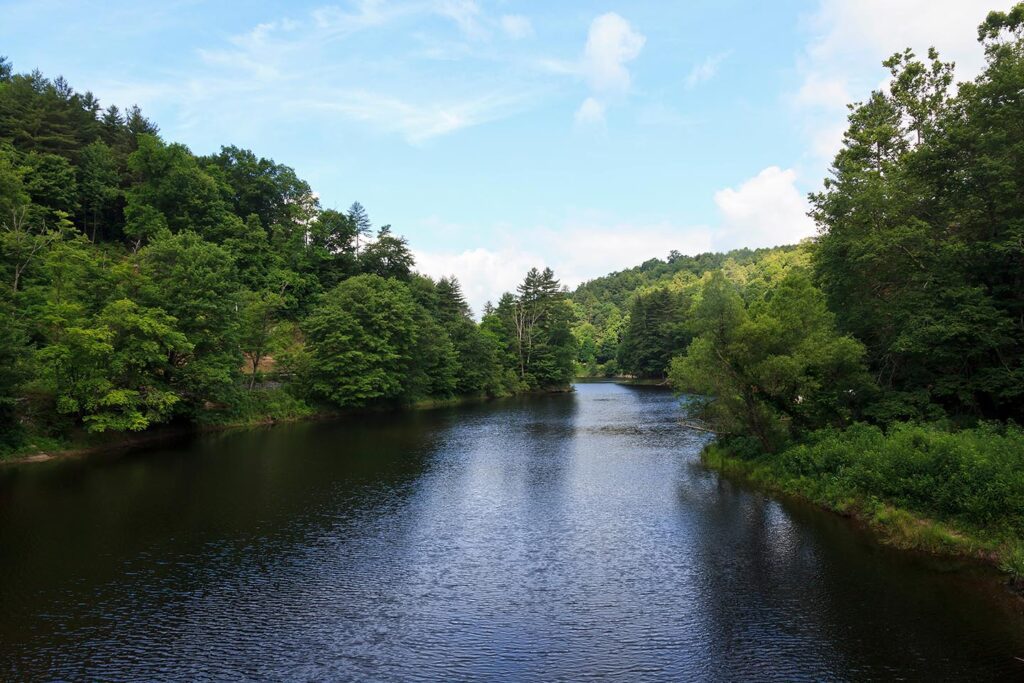
Protecting water sources, like rivers, are vital to PFAS compliance.

What Are PFAS?

PFAS (per- and polyfluoroalkyl substances) — including PFOA, PFOS, and GenX — are persistent chemicals found in industrial and consumer products such as firefighting foam, water repellent items, and cookware. Released into the environment, they accumulate in rivers, lakes, and groundwater, posing serious health risks — making PFAS compliance an important topic for our communities.

Are PFAS Harmful To Humans?

PFAS, known as “forever chemicals,” do not break down easily and build up, or bioaccumulate, in the environment and human body. Scientists have identified ingestion through drinking water as the primary pathway for exposure in humans. PFAS have been linked to liver and kidney damage, hormone disruption, reproductive issues, and certain cancers.

Understanding “Forever Chemicals” in North Carolina

1980s: PFAS have been present in NC since the 1980s, largely due to industrial discharge into waterways such as the Cape Fear, Catawba, and Broad Rivers — the drinking water source for tens of thousands of North Carolinians.

2017: Public concern rises after GenX was detected in the Cape Fear River.

2024 (April): EPA finalizes national standards for 6 PFAS compounds in drinking water (PFOA, PFOS, PFNA, PFHxS, PFBS, HFPO-DA), giving public water systems 5 years to comply.

2024: An EWG analysis finds that the drinking water for at least 2.5 million North Carolinians exceeds the just-finalized federal limits.

2025: The NC DEQ states its intent to draft a rule requiring industrial dischargers and POTWs to monitor and report on levels for 3 PFAS chemicals — PFOA, PFOS, and GenX — to attempt to reduce discharge at the source and lower the burden on residents and municipalities.

2029: All public water systems must be in compliance with the EPA’s new national standards, the PFAS maximum contaminant levels (MCLs).

Move Towards Compliance – Conducting a PFAS Pilot Study

Thrasher’s team of water resources experts is up-to-date on the latest developments in the industry, from regulations to water treatment solutions.

Our water resource engineers recommend that municipalities take the following steps and use a pilot study to determine the best path forward for PFAS compliance. Our team has vetted suppliers and is already working with them to complete these studies and can help manage the process from start to finish.

Step 1: Source Water Identification

  • Identify primary intakes: rivers, lakes, wells

Step 2: Test Source Water

  • Measure water quality to determine direction for Pilot Study

Step 3: Results Interpretations

  • Compare to Federal MCLs
  • Assess Hazard Index for mixed PFAS Chemicals

Step 4: Conduct A Pilot Study

  • Understand the type of material or resin treatment options available
    • Granulated Activated Carbon
    • Ion Exchange
    • Reverse Osmosis
  • Conduct study to verify which treatment options
    are most effective at eliminating unwanted material

Step 5: Existing Treatment Process Update

  • Based on results, design necessary upgrades to existing facilities to remove PFAS chemicals from drinking water source
  • Perform the changes to the water treatment process, including updating filters, new resin treatments, and any other retrofitted specialized equipment

Water Treatment

Pilot testing ensures selection of the most effective treatment. Upgrades may include retrofitting existing treatment or expansion with new treatment. Regular monitoring protects public health and ensures PFAS compliance.

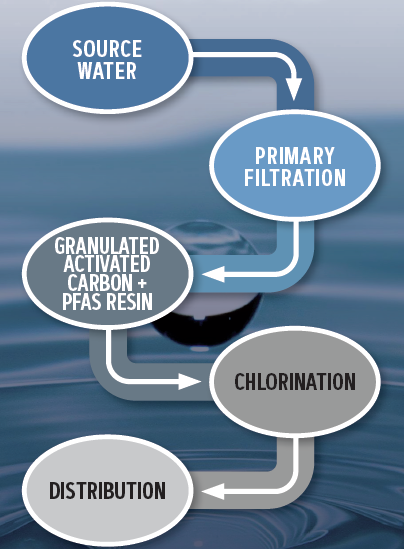
Water Treatment Diagram for PFAS Compliance

Have Questions? Thrasher NC Can Help.

Our experienced utilities engineers can help navigate you water system needs. Contact us whenever you have questions.

NC DEQ: Water Resources Engineering Grants and Financial Assistance 101

The North Carolina Department of Environmental Quality (NC DEQ) plays a pivotal role in helping communities secure resources to develop robust water infrastructures and prepare for sustainable development. This article outlines two key grant programs offered by the NC DEQ that local governments and councils should not hesitate to take advantage of in 2024.

Additional Support In Applying for NC DEQ Water Resources Programs

Communities should look into resources available to help them apply for water supply and resources grants and assistance. Most grants have been assigned grant managers, responsible for supporting communities in submitting competitive grant applications.

Additionally, if a water supply engineering firm has been contracted to support the project, this resource can often directly support or find a resource to support with the grant writing and application process.

In some cases, such as the 9-Element Plan projects references in #2 below re: Water Quality Management Planning Grant, a special resource will be assigned. For these projects a Division of Water Resources support staff member is assigned to answer questions and advise during the process.

1. Water Resources Development Grant Program – State and Local Projects
The Water Resources Development Grant Program  is a NC DEQ program designed to provide cost-share grants and technical assistance to local governments. The State and Local Projects are those most likely to be applicable across a wider range of communities (vs. programs geared towards Coastal Communities, etc.), so we’ve broken just these State and Local water resources project types, qualifications and application components down below.

Applicable Projects:

  1. Water Management – Stormwater control measures, drainage, flood control, hydrologic restoration, etc.
  2. Water-Based Recreation – Greenways, Trails, Boardwalks; Paddle Access, Fishing Docks/Piers; land acquisition for water-based recreation sites operated by local governments.
  3. Stream Restoration – Restoration or stabilization of degraded streams & shorelines, aquatic barrier removals, etc.
  4. Feasibility / Engineering Studies – Towards implementation of one of the four eligible categories.
  5. Natural Resources Conservation Service Environmental Quality Incentives Program (EQIP) – Learn more here.

Eligibility: Units of local government and local political subdivisions. However, projects benefiting underserved communities within a Tier 1 County will be prioritized.

Application Deadlines: Two standard grant application cycles annually for all non-navigation projects. The Spring 2024 application cycle will begin January 2 and ends on June 30, 2024. The Fall application cycle will be announced at a later date and usually runs through the end of the year.

Funding: Applicants are generally encouraged to not exceed a $200,000 funding request, however larger awards may be granted on a case-by-case basis. The suggested limit is $50,000 for engineering/feasibility studies. Administrative costs should not exceed 10% of the total project budget.

Evaluation Criteria: This grant is weighted most heavily on environmental benefits (eg. protect a valuable resource area or enhance environmental resilience) and minimal negative environmental impacts to the project area or adjacent areas. This is followed by projects that will provide the most economic and social benefits to the area. Communities that are underserved or distressed will be prioritized for selection.

  • Economic Benefits (15%)
  • Social Benefits (15%)
  • Environmental Benefits (25%)
  • Environmental Impacts (20%)
  • Regional Benefits (10%)
  • Financial Resources (10%)
  • Benefits to State-Owned Properties (5%)  

Application Components:

  • Contact Information – Applicant information, Board Chairperson Information, Payment Contact, Engineer / Consultant, etc.
  • Project Information – Project Types, with Amount Request, Cost, Geographical Details, etc.
  • Project Narrative – One or two sentence Project Scope summary and brief description of the overall project, a brief description of existing conditions
  • Treatments – Eg. Aquatic Barrier Removal, Stream Crossings, Land Acquisition, etc.
  • Budget Detail – Breakdown by Administration, Design, Permitting, Survey, Materials, Construction Oversight, Monitoring, etc.
Scaled Project Location & Conceptual Plan Maps
Signed Forms – Completed & Signed Official Resolution Form, Completed & Signed Conflict of Interest Certification, Signed & Notarized No Overdue Taxes Form (There are also a number of forms for specific projects and circumstances, detailed on the Application)
  • Reports, Photos, Letters of Support (Optional)

2. Section 205(j) WQ Management Planning Grant

The Section 205(j) Water Quality Management Planning Grant (205(j) references the section of the Clean Water Act where the grants are outlined) is a U.S. Environmental Protection Agency (EPA)-provided grant to states for water quality planning. These projects can include everything from assessments to identify the nature and extent of the water quality issues to planning specific implementation plans to address problems.

Encouraged Projects:

  • EPA 9-Element Watershed Restoration Plans – for a 12-digit or smaller USGS HUC
  • Watershed Assessments of Pollutant Sources – Source identification studies, including water quality monitoring, field assessments, modeling and GIS analyses to support watershed plan development
  • Stormwater Infrastructure Mapping – Water quality planning projects with concrete outputs such as (green and/or gray) stormwater infrastructure mapping
  • Projects that benefit water quality outside of the project area – preferably regionally or statewide
  • Knowledge sharing projects – Projects to share water quality planning knowledge between Councils of Government and their member governments

Eligibility:

Regional Councils of Government. Councils of Government may partner with any public sector organization to implement projects. A financial match is preferred, but not a requirement.

Application Deadlines:

The request for proposals is released annually in summer and projects are selected in fall. If a community plans to apply in 2024, it could be useful to begin planning to submit the application in advance.

Funding:

North Carolina typically receives around $150,000 for competitive funding of water quality planning projects. However, for the 2023 fiscal year, North Carolina received additional funding for $406,000 in total. There is no cap on pass-through funding requests. Applicants are encouraged to request adequate funds to fully execute proposed projects and also to project larger projects.

Evaluation Criteria:

Priority will be given to projects that consider and address environment justice and climate change resilience. Because water quality issues disproportionately affect urban and rural communities of color, indigenous, linguistically isolated, low-income and / or communities impacted by other stressors, the Division of Water Resources will award additional points during evaluation to projects that will benefit historically underserved populations.

Application Components:

  • Project Overview & Abstract
  • Contact & Payment Information, Project Partner Information
  • Statement of Qualifications for Project Manager or Partners
  • Project Area Specifications & Map
  • Project Goals & Types
  • Detailed Project Description
  • Photos or Diagrams (Optional)
  • Bigger Picture Benefits Explanations (Climate Resilience & Benefits to Underserved Communities)
  • Budget Summary (Required) and Match Summary (Optional)

Questions? The Thrasher Group NC can help.

If your community is looking into any of these grants, The Thrasher Group NC can help. Our local team of water system engineers is experienced in water distribution system design, treatment plant design, pump station design, treatment process engineering and other specialties included with the scope of many NC DEQ grants and financial assistance programs.

Thrasher has experience in helping communities apply for and receive assistance, coming alongside Water Boards to educate and prepare communities for growth.

Give us a call at (704) 864-2201 or send us a message using our online contact form . We look forward to speaking with you.


Case Study: Smart Water System Project Management Creates Funding for City Infrastructure Plan

The Thrasher Group North Carolina Completes City Water System Replacement Project Under Budget, Funding Forward-Thinking 5-Year Water Infrastructure Plan

Project Overview:

High Shoals, NC Water System Replacement (Phase 1)
The City of High Shoals’ public water supply infrastructure included thousands of feet of water line at or nearing end of life. The water system was experiencing frequent breaks and losing water each day. To prevent increased maintenance costs and potential interruptions to service, the city needed a plan to replace the water line.

The City of High Shoals hired The Thrasher Group North Carolina to design and replace the water system. The project was funded by a Community Development Block Grant (CDBG) grant from the North Carolina Department of Commerce.

Water System Replacement

Project Goals

  • Replace the largest water line segment in the City (5,980 linear feet)
  • Replace faulty meters, 73 meters hooked directly into the line
  • Reduce water loss (thousands of gallons per day)
  • Ensure cutover to new water line with minimal disruption to water service
  • Work with local grant writer to secure Community Development Block Grant
  • Meet all applicable North Carolina state regulations

Civil Engineering & Surveying Services Provided

  • Design Surveys
  • Design
  • Plans & Specifications
  • Permitting Coordination
  • Contract Documents
  • Bidding Services
  • Construction Administration
  • Right-of-Way/Easement Acquisition Surveying & Mapping
  • Final Project Certification

Project Approach
The Thrasher Group North Carolina took a phased approach to the water line replacement needed in High Shoals. This case study focuses on the first Phase of the project, which involved replacing the largest water line segment in the city (over 3,000 feet of 12 inch water line, around 1,000 feet of 8 inch water line and 1,500 feet of 6 inch water line). 

The second phase of the project will involve replacing the remaining water lines in town and The City of High Shoals, NC, is currently in the application process for another grant for Phase 2 of the project.

Project Challenges
One of the main challenges of the project was that the new water system replacement needed to be installed without disrupting water services to the residents. The Thrasher Group would need to work closely with the City of High Shoals to develop a phased plan that would minimize downtime to the community’s water services.

Another challenge of the project was that each phase or section of the new water line had to be disinfected and pressure tested before residences could be connected. This process took several weeks to complete and required Engineer inspections and NC State approval.

Project Outcomes
The project was a success, completed on time and under budget.

  • Minimal Downtime – Leveraging jumpers installed at key locations through the project, The Thrasher Group North Carolina successfully replaced the main feeder lines while keeping water service active, with minimal disruption to services for local residents and institutions.
  • Completed On Time – The Thrasher Group successfully managed the water system replacement construction timeline and key milestones like Engineer inspections and NC State approval. The project was completed on time.
  • Completed Under Budget – Because the project was completed under budget, the Division of Water Infrastructure (DWI) permitted the City of High Shoals to use some of the remaining grant funds to pay for updating the City’s Asset Management Plan.  Thrasher was able to update the Asset Management Plan and Capital Improvement Plan that they had originally prepared for the City.  This updated inventory of all water and sewer assets by condition and age will position High Shoals to proactively build out its water infrastructure, preventing future water loss and service disruptions.

Client Quote
“The Thrasher Group North Carolina did an excellent job on this project. They were very professional and worked closely with us to minimize interruption to water service for our community during the replacement.”
P.J. Rathbone, High Shoals, NC, Mayor